Rilakkuma: The Bear Teaching Japan to Rest
Imagine a young woman in her late twenties — call her Kaoru — pushing open the door to her Shibuya apartment at ten o’clock at night. Her feet ache. Her commute was forty minutes each way. She ate lunch at her desk again. The fluorescent hum of the office has followed her home like a second shadow, and the ceiling of her six-tatami room seems lower than it did this morning. She sets down her bag. She kicks off her shoes. And there, on the sofa, sitting in exactly the position he was in when she left twelve hours ago, is a bear. Round, honey-colored, dressed in a small white bodysuit with ear cutouts. He has done nothing today. He will do nothing tomorrow. He does not apologize for this. He simply sits, patient and warm, and somehow that is enough.
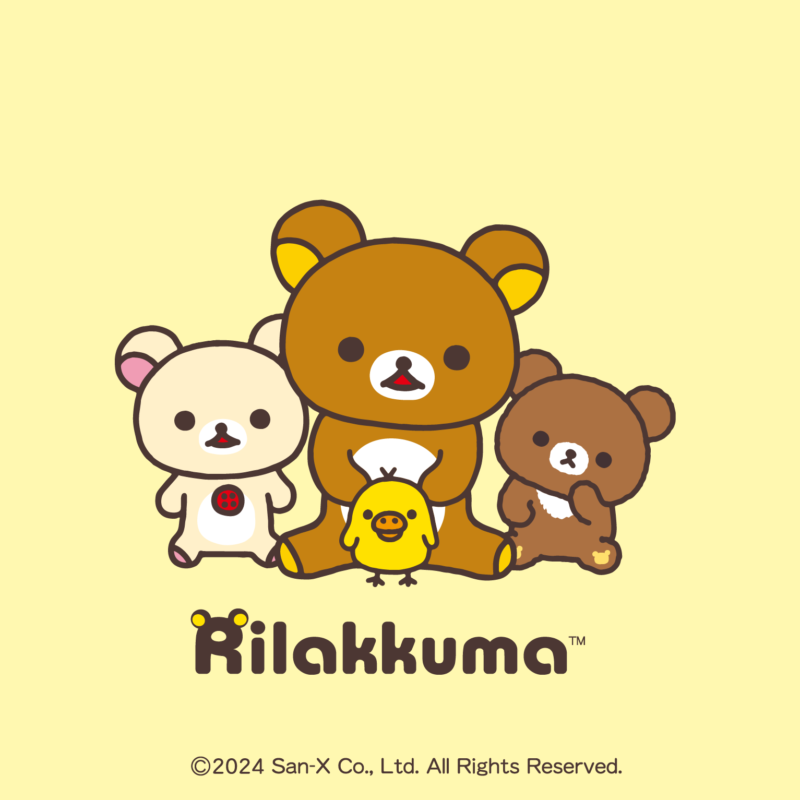
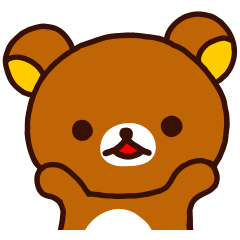
This is Rilakkuma — the character created by designer Aki Kondo for the Japanese stationery company San-X in 2003. His name is a portmanteau of the English word “relax” and the Japanese word “kuma,” meaning bear. And on his back, just between the shoulders, there is a zipper. San-X has never explained what the zipper is for, what is inside, or where the bear actually came from. In more than twenty-one years of enormous cultural popularity, the company has maintained a deliberate, almost philosophical silence on the subject. That silence, it turns out, is not a gap in the story. It is the story.
A Bear With No Origin, No Purpose, and No Apology
The Day Rilakkuma Simply Appeared
The official backstory — to the extent that one exists — is disarmingly minimal. Rilakkuma one day appeared in the apartment of an ordinary office worker named Kaoru. No explanation is offered for how he got there. He was simply present, settled in, and apparently content to remain. The character’s universe operates on this premise without embarrassment: some things arrive without reason and stay without justification, and that is perfectly acceptable. For a culture steeped in narrative obligation and social accountability, this was quietly extraordinary.
Aki Kondo has described the character as emerging from her own feelings of exhaustion and the desire to create something that embodied unconditional comfort. What she drew was not a hero, not a mascot with a mission, not a creature with aspirations. She drew a bear that was, in its essence, at rest.
Why Having No Backstory Was a Radical Design Choice
In the world of character design, origin stories carry enormous commercial and emotional weight. Hello Kitty has a name, a family, a hometown in London, a birthday. Pikachu has an entire taxonomy, a species, a role in a structured world. Rilakkuma has none of these things, and this absence is not accidental — it is the source of the character’s peculiar power. Without a fixed identity, Rilakkuma becomes a kind of emotional placeholder. He is whatever the viewer needs him to be: a companion who asks nothing, a presence that expects nothing, a shape of warmth that fits neatly into the negative space left by overwork and loneliness.
The zipper, that single unexplained anatomical detail, amplifies all of this. It suggests that something is inside the bear — a possibility, a secret, maybe even a person — but refuses to resolve the question. It is, in this sense, one of the most elegantly constructed mysteries in modern character design.
Born Into a Burned-Out Nation
The Lost Decade and the Weight of Karoshi
To understand why Rilakkuma landed the way he did, you have to understand what Japan had been living through. The collapse of the economic bubble in the early 1990s ushered in what became known as the Lost Decade — a prolonged period of stagnation that shattered the postwar social contract between employee and employer. An entire generation had been raised on the promise that loyalty, sacrifice, and relentless effort would be rewarded with lifetime employment and social stability. When that promise broke, the effort did not stop — but the reward evaporated.
The word karoshi — meaning death by overwork — had entered the Japanese vocabulary in the 1970s, but by the 1990s and early 2000s it had become a genuine public health crisis. Young workers in Tokyo were logging seventy and eighty hours a week in offices that valued visible dedication over actual productivity. The lights stayed on. The employees stayed. And somewhere beneath the surface of one of the world’s most efficient, most aesthetically refined, most collectively disciplined societies, an enormous exhaustion was quietly accumulating.
How 2003 Japan Was Ready for a Character That Did Nothing
Rilakkuma debuted on San-X stationery products in 2003 — not with a marketing campaign, not with a television series, but simply by appearing on notebooks and memo pads in convenience stores and stationery shops. His spread was organic and word-of-mouth, driven not by spectacle but by recognition. People saw him and felt something they did not have a word for: the relief of encountering something that was not trying.
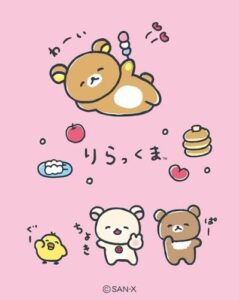
This was the precise cultural moment that the character needed. A Japan emerging battered from its Lost Decade, wrestling with new anxieties about irregular employment and social belonging, and nursing a private grief about the cost of its own ambition — this Japan was ready for a bear who lay on the sofa eating dango rice dumplings and watching television and felt no guilt whatsoever about it.
The Philosophy Hidden Inside a Cute Bear
Nani Mo Shinai — The Radical Politics of Doing Nothing
The phrase nani mo shinai — meaning “doing nothing” or “not doing anything” — appears frequently in Japanese discussions of Rilakkuma, and it carries a philosophical weight that is easy to miss if you are looking at the surface. In a society where the concept of hatarakibachi — the worker bee — is a cultural archetype worn with genuine pride, choosing to do nothing is not merely laziness. It is a form of resistance.
Rilakkuma does not resist loudly. He does not protest or argue or make demands. He simply declines. He declines to be productive. He declines to be purposeful. He declines to justify his presence through achievement. And in doing so, he quietly models something that millions of Japanese people were struggling to give themselves permission to feel: that existence itself, without productivity attached to it, is enough.
Kiiroitori’s Silent Accusation: The Worker Watching the Dreamer Rest
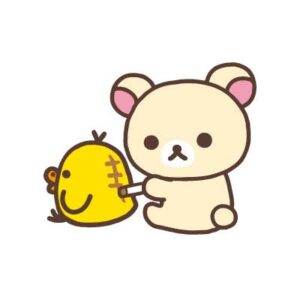
The genius of Rilakkuma’s universe is not the bear alone but the ensemble around him. Kiiroitori — a small yellow bird whose name translates simply as “yellow bird” — lives in Kaoru’s apartment and functions as the household’s conscientious member. He cooks. He cleans. He occasionally stares at Rilakkuma with an expression of barely suppressed exasperation. He is, in the language of the modern world, the person who sends emails at midnight and wonders why their colleagues are not doing the same.
The dynamic between Rilakkuma and Kiiroitori is not presented as a conflict with a winner. It is presented as a coexistence — two fundamentally different relationships to effort and rest, living side by side without resolution. Many Japanese viewers have reported that they identify with both characters simultaneously, sometimes within the same hour of the same day. That double identification is not a contradiction. It is, perhaps, the most honest portrait of modern working life ever rendered in pastel colors.
The Zipper, the Mystery, and the Mirror
What Is Inside Rilakkuma? Japan Has Been Arguing for Two Decades
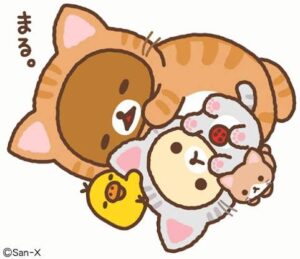
The zipper on Rilakkuma’s back has generated a genuinely remarkable volume of speculation, theory, and debate over more than two decades. Some fans believe the bear is a costume worn by a person — perhaps a salaryman who simply could not bear another day of performance, who climbed inside the bear suit and refused to come out. Others suggest it is a portal, a metaphor, a wound. A significant thread of fan interpretation holds that the bear is Kaoru herself — her inner self, the version of her that exists before the commute and the performance review and the obligation to appear capable and composed.
This last interpretation carries a particular resonance. If Rilakkuma is the self that Kaoru keeps zipped up and hidden — the tired, gentle, do-nothing self that she cannot show to the office — then the character is not merely a comfort object but a kind of externalized interior life. The apartment becomes a safe space not just for the bear but for the parts of Kaoru that the world does not reward.
Why San-X Will Never Answer — and Why That Silence Is the Point
San-X has been asked about the zipper many times. They have, consistently and with evident intention, declined to answer. This is not corporate evasion. It is a form of creative integrity that reflects a deep understanding of why the character works. The moment the zipper is explained, a specific answer replaces the infinite possibility of personal interpretation. The bear becomes a fixed thing rather than a mirror. And a mirror is precisely what Rilakkuma has always been — a surface into which exhausted people can look and see, without judgment, the version of themselves they are most afraid to be in public.
From Iyashi-Kei to Quiet Quitting — Rilakkuma’s Unlikely Global Moment
How a 2003 Stationery Bear Became a Symbol for Post-COVID Burnout Culture
In 2020, as much of the world retreated indoors and confronted — for perhaps the first time collectively — the question of what life looked like when stripped of its performing, commuting, and striving, something interesting happened to Rilakkuma’s international profile. The bear, always popular in Japan and in neighboring East Asian markets, began appearing in burnout conversations on platforms like Twitter and Reddit and TikTok, cited alongside phrases like “quiet quitting” and “lying flat” — the tang ping movement in China — as an emblem of a generation reconsidering its relationship to labor.
The Netflix stop-motion series Rilakkuma and Kaoru, released in 2019, introduced the character to a global audience that received it with a warmth that surprised some analysts and surprised no one who understood what the bear actually represented. The series is quiet, gentle, and almost shockingly sad in places — it is about loneliness and the small indignities of ordinary adult life, and it uses Rilakkuma’s presence not as a solution to those things but as a companion within them.
The Satori Generation, Slow Living, and a Bear That Was Always Ahead of Its Time
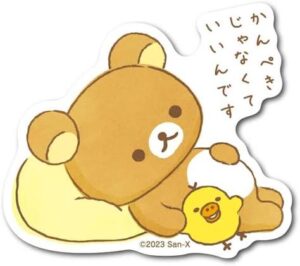
Japan’s satori generation — young people described as “enlightened” in an ironic sense, meaning they have made peace with limited ambition and modest expectations — had already been living the Rilakkuma philosophy before the rest of the world caught up. The broader global movements of slow living, hygge, and the anti-hustle cultural turn of the late 2010s were, in many ways, arriving at conclusions that Japanese popular culture had quietly encoded into a round bear nearly two decades earlier.
What makes Rilakkuma’s longevity remarkable is not that it predicted trends. It is that it spoke to something permanent — the human need for rest, for gentleness, for the relief of being in the company of something that places no demands. That need did not begin with the Lost Decade or end with COVID-19. It is older than both, and Rilakkuma, in his wordless, purposeless way, has always known this.
Somewhere in Shibuya tonight, Kaoru reaches for the light switch. On the sofa, Rilakkuma is already asleep — or doing whatever it is he does when no one is watching, his small body rising and falling, his zipper closed, his secrets intact. She stands in the doorway for a moment before the darkness takes the room. She does not know what is inside the bear. She does not need to know. She only knows that he was here when she came home, and that tomorrow, when the alarm goes off and the city starts its grinding again, he will still be here — patient, warm, and asking absolutely nothing of her at all.
Perhaps that is the most quietly radical thing about Rilakkuma: in a culture so defined by relentless effort, so fluent in the language of obligation and endurance, this small bear became beloved not because he solved anything, but because he sat beside the exhaustion and did not ask it to be anything other than what it was. He offered not an answer but a companionship — and it turned out that was precisely what an entire nation had been waiting for someone to offer.
Rilakkuma didn’t emerge from nowhere — it rose from an entire philosophy of gentle healing uniquely rooted in Japanese culture. Explore the world of iyashi-kei, the “healing aesthetic” movement that shaped everything from Rilakkuma to forest bathing to the quiet architecture of Japanese café culture, and discover how Japan built a whole philosophy around the art of being gently restored.