Mofusand: How One Cat Drawing Conquered the World
On a grey Tuesday morning in Shibuya, a queue of people stretched around the block for hours — not for a new phone, not for a sold-out concert, but for illustrations of a round, expressionless cat stuffed inside a corn dog. The people waiting were not all Japanese. They were not all young. They had arrived from different cities, speaking different languages, carrying the same quiet anticipation that usually belongs to moments of genuine cultural significance. And the disorienting thing — the thing that stops you when you first encounter it — is that the image itself is so simple. A chubby cat. A blank face. A corn dog. How did this get here?
That image, and thousands like it, belong to Mofusand, an illustration project created by a Japanese artist who goes by the name Juno. Posted first to social media in 2017 as a personal hobby, the drawings spread with a quiet, unstoppable momentum that no marketing team planned and no algorithm fully explains. They landed in the feeds of teenagers in Bangkok, office workers in São Paulo, and art students in Paris — none of whom read Japanese, all of whom felt something immediate and wordless. The question this raises is not just about one illustrator’s success. It is about what humans need from art, why Japan keeps producing things that answer that need, and what a cat with no expression can possibly be saying that the whole world wants to hear.
The Cat That Lives Inside a Sandwich
A Brand Name That Contains the Whole Joke
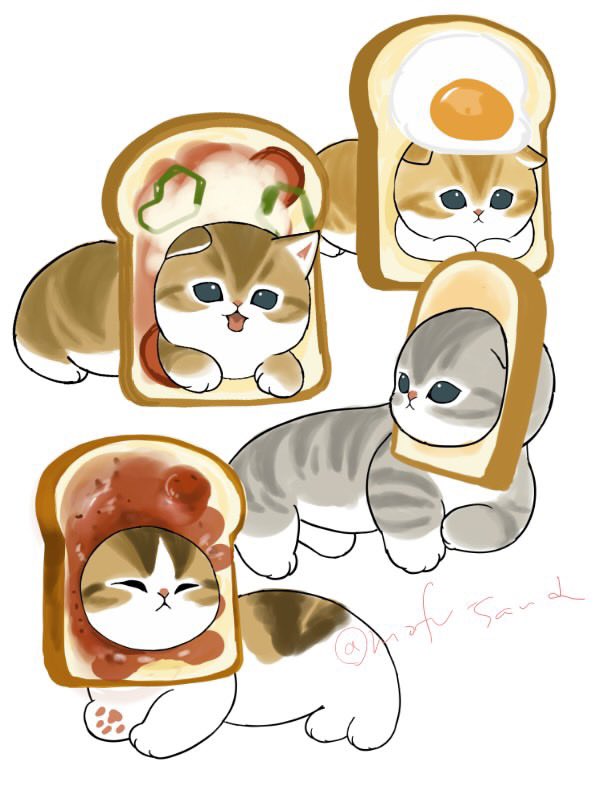
The name Mofusand is itself a small, precise piece of poetry. “Mofu mofu” is a Japanese onomatopoeia — the soft, fuzzy, tactile feeling of burying your hands in something warm and fluffy. “Sand” is short for “sandwich.” Put them together and you have a portmanteau that describes exactly what you are looking at: a fluffy cat inside a sandwich. The name contains the entire aesthetic philosophy of the project. There is no distance between the concept and the image. You hear the word and you already feel it.
This specificity of sensation is not accidental. Japanese popular culture has a long tradition of naming things with an almost haptic precision — words that encode texture, temperature, and emotional weight simultaneously. Mofusand the name prepares you for Mofusand the image: something soft, something slightly absurd, something that bypasses irony and lands directly in the body as comfort.
Who Is Juno, and Why Does It Matter That We Barely Know?
Juno remains a quietly private figure. There are no lengthy interviews, no personal brand narratives, no carefully staged studio photographs. What we know is that the drawings began as personal expression — a hobby shared on social media platforms, particularly Twitter (now X) and Instagram, with no particular commercial intention. The anonymity is not a marketing strategy. It is simply consistent with the work itself, which never draws attention to its maker. The cats are not self-portraits. They are not confessional. They exist in their own world, sealed inside corn dogs and croissants, apparently indifferent to being observed.
This matters because it changes the nature of the connection audiences form with the work. You are not following Juno’s life. You are not investing in a personality. You are simply receiving these images, again and again, and each time something small and real happens in your chest. The art exists cleanly, without the noise of personal branding, which in an era saturated with curated creator personas is itself a kind of radical act.
Kawaii Is Not Just “Cute” — It’s a Language
From Maneki-neko to the Cat Café: Japan’s Centuries-Long Cat Obsession
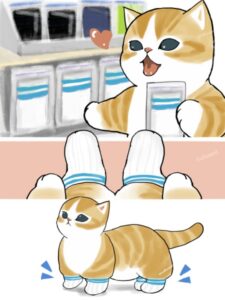
To understand why a round cat in a food item could become a global emotional event, you need to understand what cats mean in Japan — and that understanding runs deeper than Hello Kitty. The maneki-neko (beckoning cat), with its raised paw and placid expression, has been a fixture of Japanese commercial and domestic life since the Edo period. Cats appear throughout classical literature, in the woodblock prints of Utagawa Kuniyoshi, in the ghost stories of the Meiji era. They carry associations of luck, mystery, independence, and a particular quality of presence-without-demand that the Japanese sensibility seems to find endlessly resonant.
The modern neko cafe (cat café) phenomenon, which began in Osaka in 2004 and spread rapidly across Japan and then the world, was not simply a business idea. It was a response to urban loneliness, to apartment-dwelling rules against pets, to the specific hunger for uncomplicated warmth that city life creates. Cats, in Japan, are not just animals. They are containers for a certain quality of emotional need — quiet, self-sufficient, available but never desperate for your attention.
The Second Kawaii Wave: When Cute Became Emotional Communication
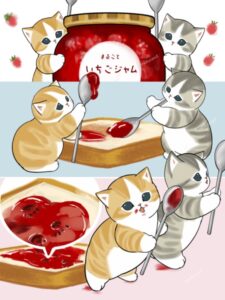
Kawaii, the aesthetic of cuteness that emerged as a distinct cultural force in Japan in the 1970s, has always been more complex than its Western reception suggests. In its origins, kawaii was a minor rebellion — young women writing in rounded, childlike script as a rejection of formal adult expectations, discovering that softness could be a kind of refusal. By the time Sanrio’s Hello Kitty and the wider character goods industry had industrialized it, kawaii had become a full aesthetic language with its own grammar: rounded forms, pastel palettes, simplified features, a deliberate regression toward innocence.
But something shifted in the social media era. The second wave of kawaii is less about innocence and more about emotional shorthand — the use of cute imagery to communicate feelings that are too complicated, too vulnerable, or too culturally specific to express directly. A character that looks tired when you are tired. A cat that looks unbothered when you need permission to be unbothered. Kawaii, in this mode, is not infantile. It is precise.
The Deadpan Face That Speaks to Everyone
Why the Exhausted Cat Is the Most Honest Character on the Internet
The most arresting thing about Mofusand’s cats is what their faces do not do. They do not smile reassuringly. They do not perform delight for the viewer. They sit, wedged inside their sandwiches, with an expression that can only be described as profoundly neutral — a look that contains, somehow, both absolute contentment and the faint awareness that existence is a little strange. That face is the engine of the entire phenomenon.
In an online environment saturated with performed emotion — content optimized for maximum engagement, faces arranged into expressions designed to trigger specific responses — the Mofusand cat’s blankness reads as almost radical honesty. People who spend their days managing their digital expressions, calibrating their reactions for audiences, find in that deadpan face a kind of permission. The cat is not asking you to feel a particular way. It is simply being, inside its corn dog, and that is enough.
Ma, Mono no Aware, and the Philosophy Hidden in a Blank Stare
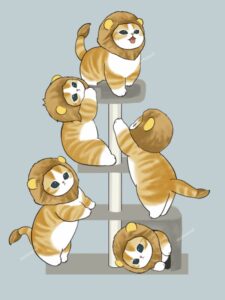
There is a concept in Japanese aesthetics called ma (negative space, or the meaningful pause between things) and another called mono no aware (the bittersweet awareness of impermanence, the gentle sadness of beautiful things passing). Neither of these concepts requires explanation to be felt. The Mofusand cat’s expression enacts both of them. There is ma in the space between the cat’s blankness and the viewer’s emotional response — a gap that the viewer fills with their own meaning, their own tiredness, their own need for softness. There is mono no aware in the slight absurdity of the images — the sense that this small, soft thing exists in a world that is too large and too loud, and has decided, reasonably, to live inside a sandwich instead.
This is not an interpretation that Juno has offered or confirmed. It may not be intended at all. But great simple art has always worked this way — by leaving precisely the right amount of space for the audience to enter.
How a Hobby Became a Global Phenomenon Without a Marketing Plan
The LINE Sticker Cascade — The Viral Engine the West Never Saw
The mechanism of Mofusand’s early spread is inseparable from LINE, the messaging application that functions as the dominant communication platform across much of East and Southeast Asia. LINE stickers — small illustrated images used in place of text to express emotions, reactions, and moods in conversation — created an ecosystem perfectly suited to Mofusand’s visual language. When you use a Mofusand sticker to tell someone you are tired, or grateful, or simply present, you are doing something the written word handles less gracefully. The image does the emotional work. It travels in private conversations, in group chats, in the daily texture of digital communication across Japan, Thailand, Taiwan, and South Korea.
This is the viral engine that Western observers missed. While English-language media tends to track cultural spread through Twitter trends and Instagram metrics, a significant portion of Mofusand’s global traction was built in the intimate, semi-private spaces of messaging apps — person to person, conversation to conversation, one quietly perfect sticker at a time.
From Tokyo Pop-Ups to Bangkok Cosplay: Spread Without a Playbook
The pop-up exhibitions in Tokyo — those queues in Shibuya, the crowds in Harajuku — were not the beginning of the story. By the time they happened, Mofusand had already become a quietly international presence through digital osmosis. What the exhibitions revealed was the depth of that attachment: people who had been receiving these images on their phones for years discovered that they wanted to stand in the same physical space as the original drawings, to be near the thing itself. In Bangkok, cosplayers appeared at events dressed as the corn dog cat. In Paris, art students began posting their own interpretations. None of this was orchestrated. All of it followed the same logic as the original work — honest, unhurried, and made entirely out of feeling.
What Mofusand Tells Us About the Future of Kawaii
SNS-Era Kawaii — When the Screen Is the Product
Mofusand represents something genuinely new in the history of kawaii as a cultural export. Previous waves — Hello Kitty, Pokémon, the broader J-pop cultural moment of the 1990s and 2000s — required institutional infrastructure: licensing deals, television networks, retail distribution, deliberate localization for foreign markets. Mofusand required none of these things. The screen was the product. The image was the distribution channel. The emotional resonance was the marketing department. What this suggests about SNS-era kawaii is that the barriers between a Japanese illustrator drawing cats at home and a teenager in Brazil feeling understood by those cats have effectively collapsed.
This is not just a story about social media efficiency. It is a story about what happens when a visual language is genuinely universal — when the grammar of rounded forms, simplified emotions, and the gentle absurdity of a cat in a sandwich turns out to be legible to humans regardless of what language they dream in.
A Solo Illustrator Rewrote the Rules of Cultural Export
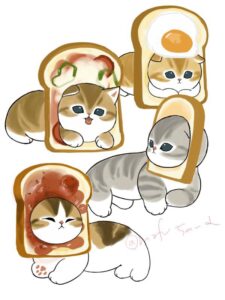
There is something quietly extraordinary about the scale of what one person drawing as a hobby has produced. The traditional model of Japanese cultural export involved companies, governments, soft power strategies, and enormous capital. Mofusand involved Juno and a drawing tablet and a social media account. The cats did the rest. What this tells us is that the unit of cultural transmission may have fundamentally changed — that an individual with a precise emotional vision and access to a global platform is now capable of building something that functions like a cultural institution, without ever intending to.
Japan has a long tradition of channeling deep cultural intelligence into apparently simple forms — the haiku, the rock garden, the tea ceremony, the maneki-neko. Mofusand is the latest entry in that tradition, and perhaps the most widely distributed one in history.
If a single illustrator drawing cats as a hobby could quietly build an emotional bridge across dozens of countries and languages — not through strategy or spectacle, but through the precise rendering of a feeling that turned out to be universal — then what does that say about what humans actually need from art? And why does Japan, again and again, keep being the place that figures this out first, offering the world a small soft thing in which to rest?
If this piece has left you curious about the deeper currents beneath Japan’s character culture, consider exploring the history of kawaii aesthetics from its rebellious postwar origins, or the remarkable world of “yuru-kyara” — Japan’s tradition of deliberately ungainly, warmly imperfect mascot characters that carry entire communities on their round, wobbling shoulders.