At Maruyama Park (円山公園), after dark, there is one tree. Everything else disappears — the food stalls, the blue plastic tarps, the crowds that fill this place by day. The floodlights find only a single weeping cherry tree, its cascading branches lit from below, and around it there is nothing but dark. Petals drift down through that darkness like warm, slow snow. You don’t plan to stop walking. You just do.
The Japanese have a phrase for what you feel in that moment: mono no aware (物の哀れ) — loosely, “the pathos of things,” the bittersweet awareness that what is most beautiful is most temporary. It is not a sad idea, exactly. It is an honest one. And in Kyoto, it is everywhere. The city has been watching cherry blossoms fall for twelve hundred years, and in that time, every significant tree, every canal path, every ancient garden has accumulated its own weight of meaning. Come for the beauty. Stay for the stories underneath it.
The Philosophy of the Falling Petal: Why Sakura Means Something Different in Japan
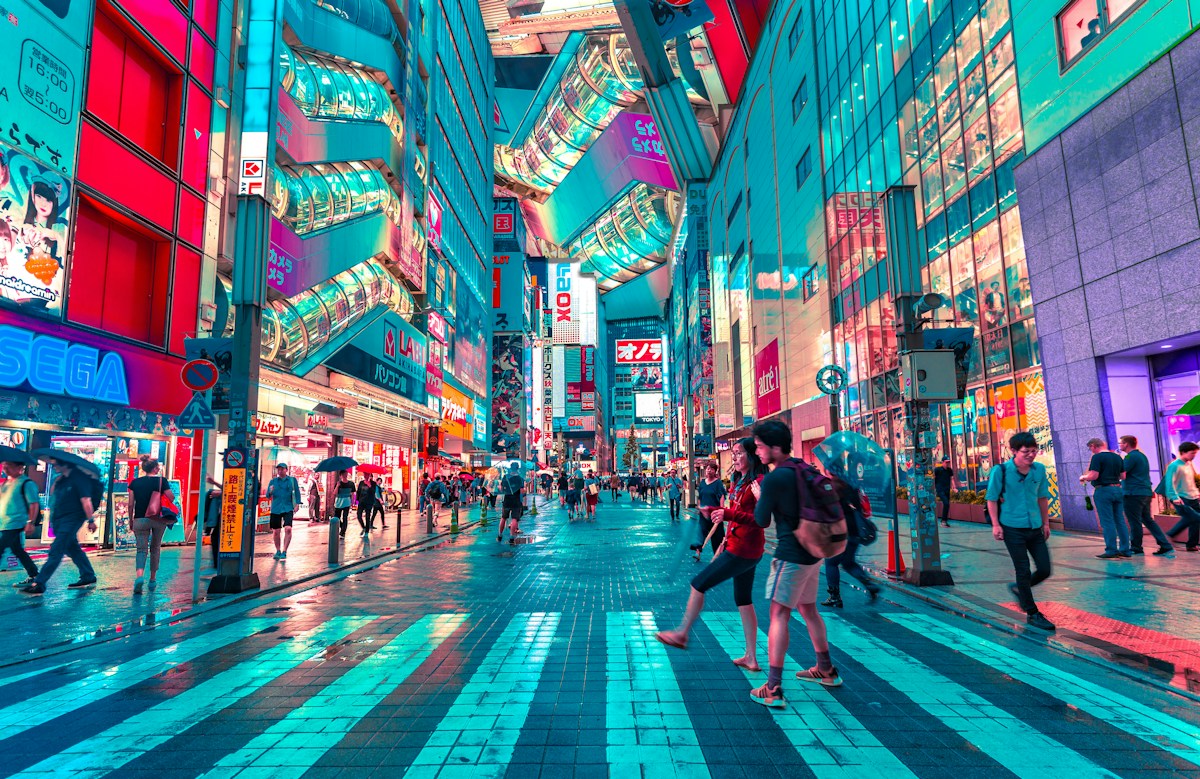
From plum to cherry — a thousand-year shift in Japanese identity
It wasn’t always the cherry blossom. In the Nara period (710–794 CE), the aristocracy looked to China for cultural cues, and the flower they celebrated was the plum. Plum blossom viewing was refined, continental, borrowed. Then, during the Heian period (794–1185 CE), something shifted. Japan began developing its own aesthetic identity — its own literature, its own visual language, its own emotional vocabulary. The cherry blossom moved to the center of that project. The very first use of the word “hanami” (flower viewing) in Japanese literature appears in The Tale of Genji, written around 1000 CE by Murasaki Shikibu, where cherry blossoms serve not as backdrop but as metaphor — for fleeting beauty, for impermanent love, for the particular sadness of a nobleman’s life. By the time Kyoto had been Japan’s capital for two centuries, the cherry blossom wasn’t just a flower. It was a way of thinking about being alive.
Mono no aware — beauty measured in days, not centuries
The philosopher Motoori Norinaga (本居宣長), writing in the eighteenth century, gave the concept of mono no aware its clearest articulation: beauty is not diminished by impermanence — it is created by it. The cherry blossom is beautiful precisely because it lasts only about a week. There is something quietly extraordinary in the fact that Somei Yoshino (染井吉野), the variety that dominates Japan’s spring landscape, is a genetic clone. Every Somei Yoshino tree in the country shares identical DNA. Which means that when spring comes, an entire nation watches the exact same species bloom and fall together, on the same schedule, in the same eight-day window. The shared impermanence of that — millions of people all standing under the same temporary ceiling — is part of what makes hanami feel less like recreation and more like ritual.
1,200 years of watching things fall
Kyoto holds the world’s longest continuous cherry blossom bloom records — court diaries and imperial documents dating back to the ninth century have allowed scientists to reconstruct average bloom dates across more than a millennium. Recent data makes for sobering reading: average peak bloom in Kyoto now occurs nearly two weeks earlier than it did three centuries ago, with several of the earliest blooms on record happening within the past two decades. The city that has been watching petals fall longer than almost any human institution has existed is now watching its own ancient cycle change in real time. Mono no aware, it turns out, operates at geological scale too.
The Weeping Tree That Never Dies: Maruyama Park’s Gion Night

A dynasty of gardeners and a tree that had to be reborn
The weeping cherry at the heart of Maruyama Park has a complicated biography. The original tree was designated a Natural Monument in 1938, a recognition of its exceptional age and beauty. Nine years later, in 1947, it died. But it did not end. In 1928 — twenty years before the original tree’s death — the fifteenth-generation master gardener Sano Toemon (佐野藤右衛門) had cultivated a seedling from it. He tended that seedling for nearly two decades. In 1949, two years after the original fell, he planted the successor in its place. That act — growing a replacement tree for a living tree, spending nearly two decades in quiet preparation for a loss that hadn’t yet happened — is one of the most extraordinary gestures of cultural stewardship in Japanese horticultural history. Patience, here, was not a virtue. It was an art form.
What darkness does to a weeping cherry tree
The night illumination of this tree, known locally as the Gion no Yozakura (祇園の夜桜) — the Night Sakura of Gion — is one of the most affecting sights in Japan. The branches cascade nearly to the ground, a waterfall of white-pink flowers. But it is the darkness around the tree that does the real work. In daylight, the tree competes with everything: the park’s paths, the other trees, the city behind it. At night, lit from below against complete black, it becomes singular. The only warm thing in the world. Petals fall through the beam of the floodlights and vanish into shadow. You understand, standing there, exactly what mono no aware means — not as an intellectual concept but as a physical sensation in the chest.
A Path Planted in Grief: The Philosopher’s Walk and Its Hidden Story

The painter who gave 300 trees to a city — and why
Most visitors who walk the Philosopher’s Walk (哲学の道) don’t know the name Hashimoto Kansetsu (橋本関雪). They should. In 1921, Kansetsu and his wife Yone donated three hundred cherry trees to the city of Kyoto, planted along the canal path that now bears someone else’s name. He continued planting in the years that followed — in memory of those killed in the Great Kanto Earthquake of 1923, and later, after his wife’s death, in her memory as well. These trees are called Kansetsu Zakura (関雪桜). Every spring, the tourists who crowd this path are walking under a private memorial. They photograph it. They picnic beneath it. They are, unknowingly, inside someone else’s grief — grief so large it was transformed into beauty and given away. There is something in that which deserves to be known.
The philosopher who thought better while walking
Nishida Kitaro (西田幾多郎), considered Japan’s greatest modern philosopher, walked this canal path daily for decades on his commute to Kyoto University. Near Honen-in (法然院), a stone monument bears one of his poems. The path was named after him by locals who noticed his daily ritual. Nishida’s philosophy wrestled with the relationship between nothingness and being, between stillness and motion — and it is tempting to wonder how much of that was worked out along this particular stretch of water, under these particular branches. To walk the Philosopher’s Walk is to occupy a layered space: a painter’s grief overhead, a philosopher’s thought beneath your feet, and canal water beside you carrying fallen petals downstream.
Hanaikada — when petals become rivers
After peak bloom, when the petals begin to fall in earnest, they drift into the canal and travel downstream in slow, dense clusters. The Japanese call this hanaikada (花筏) — “flower raft.” It is considered one of the most beautiful phenomena of the cherry blossom season, and it happens only after the blossoms are already past their peak. In a culture that values impermanence, even the falling has been given a name and a kind of reverence. The Philosopher’s Walk is perhaps most quietly powerful in the days after the crowds have gone — when the trees are turning green at the tips, the canal is pink, and the season is ending gracefully rather than all at once.
The Warlord’s Last Feast: Daigoji and the Party That Changed Japan
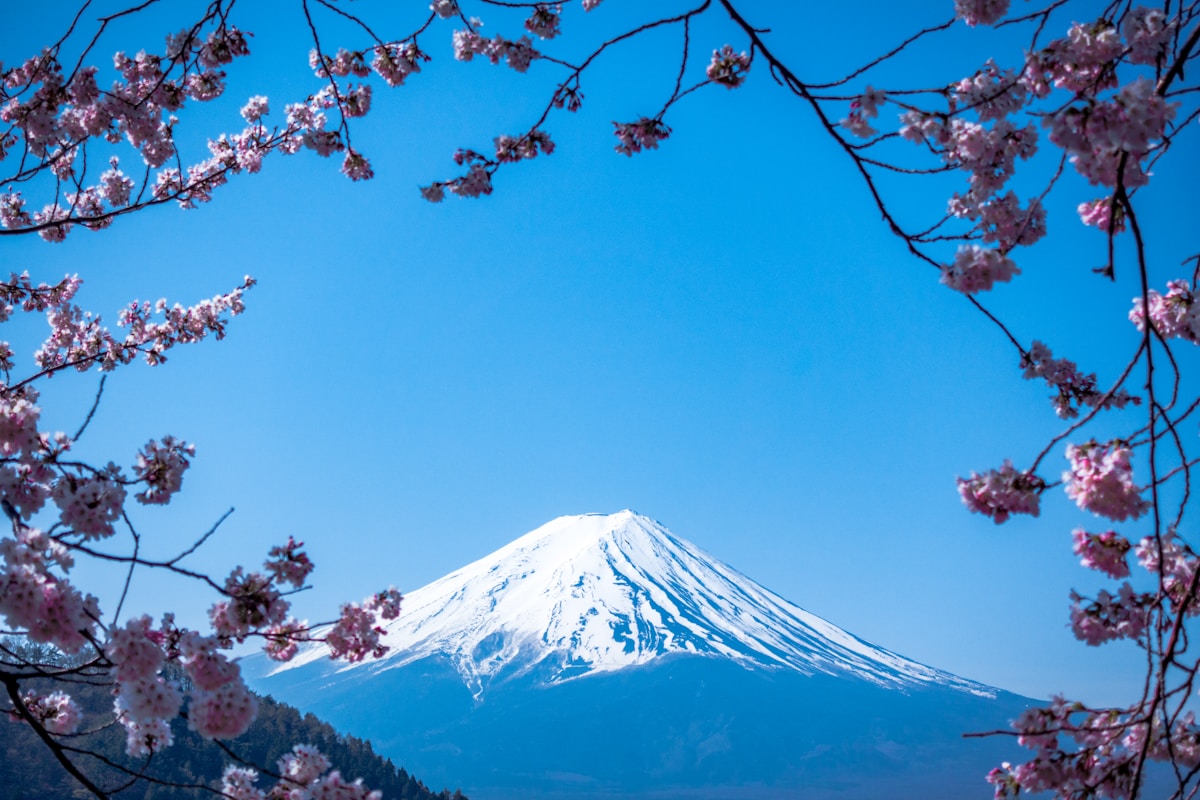
The party that changed how Japan celebrates cherry blossoms
In April of 1598, the warlord Toyotomi Hideyoshi (豊臣秀吉) threw a party at Daigoji (醍醐寺) that the country would not forget. He had seven hundred cherry trees relocated from across the Kinai region and planted throughout the temple’s lower gardens. He invited thirteen hundred guests — including Tokugawa Ieyasu (徳川家康), the man who would eventually inherit Japan — along with his wives and consorts, his generals and courtiers. There was wine. There were costumes. There was dancing. It lasted a day and left a legend. Hideyoshi died five months later. Before him, blossom viewing in Japan had been a quiet, aristocratic affair — contemplative, restrained, conducted in small groups with poetry and refined conversation. The Daigo no Hanami (醍醐の花見) changed that register entirely. The wine-soaked, feast-under-the-blossoms tradition of modern hanami — the blue tarps and the convenience store snacks and the office parties in the park — traces its cultural DNA back to one dying warlord’s extravagant spring afternoon.
The painting, the tree, and the name that outlasted an empire
In Daigoji’s garden stands a weeping cherry tree of approximately 170 years, known as the Taiko Shidare-zakura (太閤しだれ桜) — the Taiko’s Weeping Cherry, named for Hideyoshi’s honorific title. The celebrated painter Okumura Togyu (奥村土牛), one of the twentieth century’s most revered Japanese artists, depicted this tree in a masterwork simply called Daigo. The tree is now also called “Togyu’s Cherry.” One living thing, three identities: a feudal lord’s legacy, a painter’s subject, a still-blooming monument. When the word “ancient” is used about trees like this, it is not poetry. It is biography.
The Spots That Belong to Kyoto, Not to Tourism
Hirano Shrine’s thousand-year vigil — and sixty kinds of silence
Hirano Shrine (平野神社) was founded in 794 CE, the same year Kyoto became Japan’s capital. Its cherry festival, the Oka-sai (御香祭), has been held every April since 985 CE — more than a thousand years without interruption, through wars, famines, and the collapse of multiple governments. The shrine’s grounds contain four hundred cherry trees across sixty different species, many planted during the Heian period as symbols of vitality and divine favor. What that diversity means in practice is this: rare double-petaled varieties in colors that range from deep rose to near-white, species you will not find at Maruyama or along the Philosopher’s Walk, blooms that open on different schedules so that the shrine’s season extends longer than almost anywhere else in the city. Hirano is not a famous landmark. It is a living botanical library of cherry blossoms, quietly tended for over a millennium.
Nakaragi no Michi — the weeping tunnel only locals know
Nakaragi no Michi (半木の道) runs along the western bank of the Kamo River (鴨川), shaded by approximately seventy weeping cherry trees whose branches have been trained over bamboo frames to form a low, arching tunnel of blossoms. It is almost entirely unknown to international visitors. On a Saturday morning during peak bloom, you will find locals jogging through it, walking dogs, eating convenience store lunches on the grass beside the water. The cherry blossoms are not the event — they are the season. This is the distinction that separates Nakaragi no Michi from more famous spots, and it may be the most important distinction in understanding what sakura means to people who live with it. The most intimate experience of cherry blossoms is not the spectacular. It is the ordinary — the way spring simply arrives, and life continues inside it.
After the Petals Fall, Something Remains
What Kyoto taught the world about letting go
The Japanese have a word for the blizzard of falling petals: sakura fubuki (桜吹雪) — literally, “cherry blossom snowstorm.” Combined with the hanaikada on the canals, the end of cherry blossom season in Kyoto is not so much a conclusion as a final movement. Locals do not mourn the end of bloom. The attitude is quieter and more generous than that: this year’s blossoms are complete now; next year’s are already sleeping inside the same branches. There is a kind of gratitude in this that has nothing to do with resignation. It is paying full attention to something while you have it, without demanding that it stay.
The longest spring in Japan
Kyoto keeps the season alive longer than anywhere else in Japan. At Heian Shrine (平安神宮), the deep-crimson yae-beni-shidare (八重紅枝垂) weeping cherry trees bloom weeks after the Somei Yoshino have already fallen — a second spring, quieter and more private than the first. Then Hirano Shrine’s double-petaled varieties follow in turn. From late March into late April, somewhere in this city, someone is always watching petals fall. Kyoto does not let spring go quickly. It holds it open, gently, until the last possible moment.
In the days after peak bloom, when the cobblestones are pink and the canal water carries drifting white, and the trees are already greening at the tips — that is when Kyoto is most itself. The crowds have gone. The season is finishing with grace. And maybe that is what mono no aware has always been about: not sadness, exactly, but the discipline of paying full attention while you still can, before the petals, and the moment, and the year, are quietly carried downstream.
If the impermanence of spring has moved you, Japan’s autumn offers the same meditation in amber and red — explore our guide to Kyoto’s most extraordinary fall foliage season.
