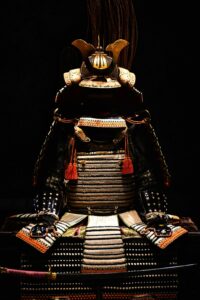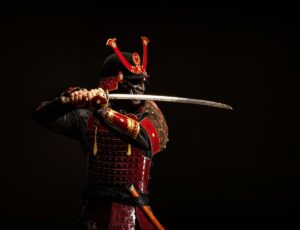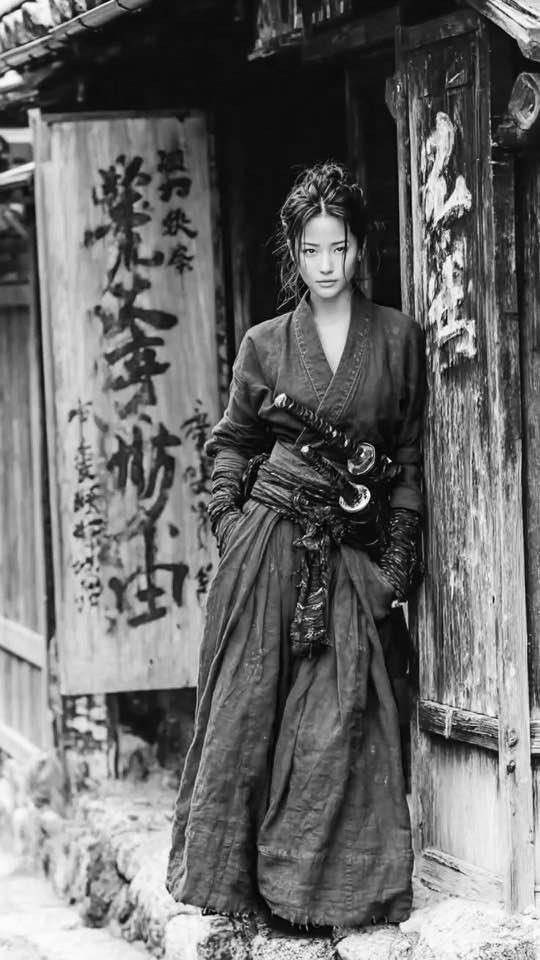
On the night of June 21, 1582, one of the most consequential journeys in Japanese history began not with a battle cry but with a whisper. Tokugawa Ieyasu, the man who would eventually unify Japan and found the Tokugawa shogunate that would govern for two and a half centuries, had just received devastating news: his ally and overlord Oda Nobunaga had been assassinated at Honno-ji temple in Kyoto. Ieyasu was stranded in Sakai, far from his home domain of Mikawa, surrounded by the chaos of a country suddenly without its most powerful warlord. His small retinue was hopelessly exposed. Armies loyal to the assassin could materialize at any moment.
What happened next was not a heroic last stand. It was something quieter, and in many ways more remarkable. A network of operatives — estimates place the number around 200 — emerged from the forested mountains of Iga province to form a human corridor through hostile terrain. They knew the paths that didn’t appear on maps. They understood which villages could be trusted and which could not. They had, almost certainly, been gathering that information for years before anyone knew it would be needed. Ieyasu reached home safely. Japanese history turned on that pivot. And the people who made it possible were ninja (忍者) — though almost nothing about how they operated resembles what that word has come to mean in the modern imagination.
Not Warriors — Professionals: Rethinking What a Ninja Was

The Meaning Hidden in the Word Itself
The word ninja itself is a clue that most people have never stopped to examine. Written with the characters for “endure” and “person,” the term points not toward aggression but toward patience — the capacity to wait, to withstand, to persist without revealing oneself. An older and perhaps more illuminating term for the same practitioners is shinobi (忍び), derived from the verb meaning “to conceal” or “to steal through.” Neither word contains anything that suggests combat as a primary function. Both words are fundamentally about restraint.
This linguistic reality matters because it reflects an operational reality. The historical shinobi were not battlefield warriors in any primary sense. They were intelligence professionals in the fullest meaning of that phrase — people whose value to a warlord lay in what they could learn, report, and manipulate before a sword was ever drawn. In the brutal calculus of the Sengoku period (戦国時代), Japan’s century of civil war roughly spanning 1467 to 1615, the warlord who knew his enemy’s supply lines, garrison strength, internal disputes, and planned movements held an advantage no cavalry charge could replicate. The shinobi provided that advantage.
Farmers, Monks, and Merchants — The Hidden Workforce of Feudal Intelligence
What made the shinobi genuinely radical for their era was their social structure — or rather their deliberate absence of one. The samurai class operated within a rigid hierarchy of loyalty and public honor. The shinobi came from somewhere else entirely. Many were ji-samurai, a class of rural semi-warriors who farmed their own land and owed flexible rather than absolute loyalty to any lord. Others were drawn from traveling merchants, itinerant monks, and wandering entertainers — the invisible classes of feudal Japan who could cross provincial borders without arousing the suspicion that a known warrior’s presence would immediately trigger.
This was not accidental. It was doctrine. The shinobi tradition understood, centuries before modern intelligence agencies codified the same insight, that the most effective operative is the one who is not recognized as an operative at all. The farmer returning from market. The Buddhist monk on pilgrimage. The peddler selling medicine from a pack. These were not disguises layered over a recognizable warrior identity. In many cases, they were the actual lives of the people involved — lives that happened to include, as a professional sideline, the gathering and selling of information to the highest bidder.
The Two Schools That Sold Secrets to Warlords
Iga and Kōka — Mountain Cradles of a Mercenary Intelligence Industry
The two provinces most associated with the shinobi tradition — Iga (伊賀), in what is now Mie Prefecture, and Kōka (甲賀), in present-day Shiga Prefecture — sit in the same cluster of forested mountains, separated by a single ridge. The geography was not coincidental. Both regions were historically difficult for outside lords to fully control, filled with small autonomous communities of ji-samurai who developed, over generations, a shared culture of self-reliance, local intelligence networks, and the careful management of information as a tradeable commodity.
By the height of the Sengoku period, the Iga and Kōka traditions had evolved into something resembling professional guilds. Warlords from across Japan hired their operatives the way a modern corporation might contract a specialized consulting firm — for specific tasks, for ongoing intelligence gathering, for what historical sources describe with remarkable frankness as ninjutsu (忍術), the “art of endurance,” which encompassed everything from reconnaissance and infiltration to psychological manipulation and controlled arson. The operatives were paid. They were not vassals. They retained, in many cases, the freedom to sell their services to other lords — a mercenary flexibility that made them simultaneously invaluable and, to the great warlords who employed them, deeply unsettling.
How Oda Nobunaga’s Fear of Information Launched a War Against a Province
Oda Nobunaga understood the power of intelligence, which is precisely why he feared it existing outside his control. In 1579 and again in 1581, he launched devastating military campaigns against Iga province in what historians call the Tensho Iga War (天正伊賀の乱). The campaigns were brutal even by the standards of an unusually brutal era — villages burned, populations decimated, the autonomous community structure of Iga essentially destroyed. Many surviving Iga shinobi scattered across Japan, some entering the service of other lords, some disappearing into the anonymity that was, after all, their professional specialty.
The irony that the man who tried to destroy Japan’s premier intelligence community was himself later brought down partly through a failure of intelligence — he was caught entirely off guard at Honno-ji — was not lost on later historians. And the further irony that Ieyasu, who eventually benefited most from Iga’s scattered survivors, would go on to complete the unification Nobunaga began gives the whole story a shape that feels almost novelistic. History rarely offers such clean reversals, and yet here one sits, documented in sources from multiple directions.
The Manuals That Rewrote Everything We Thought We Knew
The Bansenshukai — A 23-Volume Intelligence Doctrine Hidden for Centuries
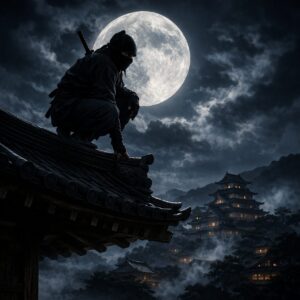
Perhaps the single most important document for understanding what the shinobi tradition actually was is the Bansenshukai (万川集海), compiled in 1676 by Fujibayashi Yasutake, an Iga shinobi whose family had survived Nobunaga’s campaigns. The title translates roughly as “Ten Thousand Rivers Flow Into the Sea” — a poetic image of diverse techniques converging into unified doctrine. The work runs to 23 volumes. It is exhaustive, systematic, and almost aggressively practical. For centuries it remained in private hands, passed within families as a proprietary trade document. Its full contents only became widely accessible to scholars in the twentieth century, and the picture it paints is startling in how little it resembles the ninja of popular imagination.
The Bansenshukai is not primarily a combat manual. It contains, yes, sections on tools, weapons, and physical techniques. But the overwhelming weight of its content concerns intelligence tradecraft in forms that a modern intelligence professional would find immediately recognizable:
- Methods for recruiting informants within an enemy’s household
- Techniques for spreading disinformation to fracture an enemy’s internal trust
- Protocols for constructing and maintaining false identities over extended periods
- Analysis of human psychological weaknesses and how to exploit them
- Guidance on the ethical foundations of the shinobi’s mission
That last point deserves emphasis. The Bansenshukai opens with a lengthy philosophical preamble rooting the shinobi tradition in Confucian ethics and Buddhist thought. This was not decorative. The text argues that intelligence work divorced from moral purpose produces operatives who become liabilities — people who, having mastered deception as a craft, apply it without discrimination and eventually betray everyone. The manual treats the cultivation of ethical judgment as a prerequisite for operational effectiveness. It is, in this sense, a more intellectually sophisticated document than most of what has been written about the people it describes.
Psychology Over Combat — What the Texts Actually Teach
The Bansenshukai is not alone. The Shoninki (正忍記), compiled around 1681 by Natori Masazumi of the Kishu-ryu school, covers similar territory with a particular emphasis on psychological technique. It devotes substantial attention to the reading of human character — how to identify a person’s dominant motivations, how to present yourself as whatever that person most needs to see, how to gather information through seemingly casual conversation that the subject does not recognize as interrogation. These are not the skills of a warrior. They are the skills of a therapist, a diplomat, or a case officer.
Reading these texts carefully, one begins to understand that the shinobi tradition’s greatest achievement was not any individual operation but the systematization of knowledge about human behavior into teachable doctrine. In this, it belongs alongside other great Japanese traditions of codified craft — the tea ceremony, ikebana flower arranging, the martial arts. The impulse to take a practice and render it into transmissible written philosophy is distinctly, characteristically Japanese. The shinobi simply applied it to the craft of invisibility.
The Craft of Disappearing in Plain Sight
Seven Faces, One Operative — The Art of Constructed Identity
The Bansenshukai describes what it calls the shichi ho de (七方出) — the “seven ways of going out” — a taxonomy of disguise identities considered most useful for an operative operating in unfamiliar territory. The seven were: traveling monk, mountain ascetic, traveling entertainer, merchant, ordinary traveler, Buddhist priest of a specific wandering sect, and fortune teller. What is striking about this list is not its ingenuity but its ordinariness. These were the categories of people who were expected to be strangers, expected to pass through without fixed social connections, expected to ask questions and receive hospitality from people who had never met them before.
Maintaining these identities required far more than a costume change. The shinobi texts describe years of preparatory study — learning the specific sutras a particular sect of monks would be expected to recite, understanding the dialects of regions where a merchant might claim to originate, absorbing enough of a trade’s technical vocabulary to survive scrutiny from a genuine practitioner. A hastily constructed identity that collapses under a single probing question is worse than no disguise at all. The texts understood this perfectly and demanded a depth of preparation that makes modern cover story construction look almost casual by comparison.
Why the Famous Black Suit Was Never Part of the Job
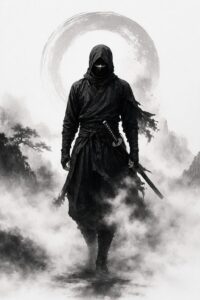
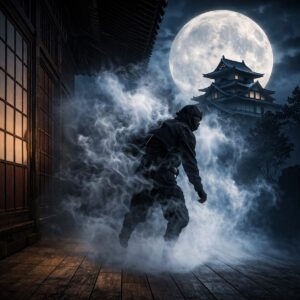
The iconic image of the ninja — black-clad figure with only the eyes visible, moving through shadows — is almost entirely a product of the Japanese theatrical tradition known as kabuki (歌舞伎). In kabuki performance, stagehands who needed to move props and assist actors in full view of the audience wore black to signal their conventional invisibility — a theatrical agreement with the audience that persons dressed in black are not to be perceived. When playwrights began dramatizing shinobi stories in the Edo period, they dressed their ninja characters in the same convention-black, and the image stuck with a tenacity that has outlasted every historical correction.
The actual operative literature describes something almost opposite in principle. A shinobi in black is a shinobi immediately recognizable as a shinobi. The texts recommend dressing in the colors of the environment and, above all, in the clothes of whatever social role is being performed. The best camouflage, the manuals argue with a logic so obvious it almost feels insulting, is not the color of shadows. It is the appearance of belonging exactly where you are.
The Intelligence Tradition That Never Really Disappeared
From Feudal Tradecraft to Modern Information Warfare — A Surprisingly Short Distance
The operational principles described in the Bansenshukai and Shoninki did not evaporate when the Sengoku period ended. The Tokugawa shogunate, acutely aware of how information had shaped its own rise to power, built extensive domestic intelligence networks using many of the same principles — operatives embedded in merchant communities, networks of informants in entertainment districts, systematic programs for monitoring the communications of potentially disloyal lords. The specific practitioners called shinobi faded as a distinct category, but the tradecraft they had systematized continued, in modified forms, as a structural feature of Japanese governance.
Scholars of intelligence history have noted, with varying degrees of caution, the conceptual parallels between the Bansenshukai’s doctrine and modern intelligence methodology. The emphasis on long-term asset cultivation over quick extraction. The priority given to understanding an adversary’s psychological state over accumulating raw data. The recognition that an operative’s credibility — their ability to be believed — is more valuable than any single piece of information. These are not uniquely Japanese insights, but they are insights that the Japanese shinobi tradition arrived at, documented, and refined several centuries before modern intelligence agencies were formalized.
Why Scholars Are Rehabilitating the Ninja as Japan’s Most Misunderstood Intellectuals
In recent decades, a small but growing community of historians — centered significantly around Mie University, which houses a dedicated International Ninja Research Center (国際忍者研究センター) — has been working to recover the shinobi tradition from beneath centuries of theatrical embellishment. The work involves, in part, the careful reading of texts that were long treated as curiosities or fiction. It involves, in equal part, the patient correction of a popular image so deeply embedded that even many Japanese people encounter the historical reality as a surprise.
What emerges from this scholarly rehabilitation is a portrait of a tradition that was, in the deepest sense, intellectual. The great shinobi families were not thugs for hire. They were the people who understood, in a society organized around the performance of military valor, that information was the more durable weapon. They read people rather than fighting them. They invested in patience where samurai were required to invest in decisive action. They systematized uncertainty into teachable frameworks. In a culture that produced the tea ceremony as a philosophy of presence, and ikebana as a philosophy of impermanence, the shinobi tradition reads as something entirely coherent — a philosophy of knowledge, applied in the dark.
The Ieyasu crossing through Iga stays with you once you know it. Two hundred professionals moving through mountain paths in the night, guiding a stranded lord home — not through supernatural ability, not through combat prowess, but through the accumulated knowledge of terrain, of human psychology, of timing, and of how information, properly held and properly deployed, can bend history without a single sword being drawn. The real ninja did not bend reality. They read it more carefully than anyone else thought to. And in a country where even the arrangement of flowers was worthy of written philosophy, the fact that someone sat down and wrote twenty-three volumes on the art of knowing what others do not — well, that feels less like a footnote and more like a signature.
If the shadow professionals of feudal Japan intrigue you, consider exploring their cultural counterparts in the sunlight: the samurai code of bushido and the philosophy of loyalty, honor, and sacrifice that shaped Japan’s warrior nobility from the opposite direction entirely.