Bushido: The Samurai Code Shaping Modern Japan
When Japan’s soccer players left their locker room after the 2022 World Cup, they left behind something the world didn’t expect: a spotless space, neatly arranged chairs, and a small handwritten note reading “thank you” in Arabic. Cameras caught it. The internet couldn’t stop talking about it. When asked why, the players shrugged with quiet sincerity — it was simply the right thing to do. That instinct, that almost reflexive dignity, didn’t come from a team handbook or a coach’s instruction. It came from somewhere far older and far deeper.
Bushido — literally “the way of the warrior” — is often filed away as history. Something sealed inside lacquered museums, cinematic sword duels, and footnotes in East Asian studies courses. But walk through Japan with genuinely open eyes, and you’ll find it breathing. In the craftsman’s trembling focus over a piece of wood. In the commuter’s silent patience on a crowded platform. In the chef’s almost religious reverence for a single bowl of broth. Bushido did not end with the samurai. It simply changed clothes.
A Code Written in No Single Book

How Three Philosophies Forged One Warrior Soul
One of the most interesting things about Bushido is that no single founder wrote it, no single moment invented it, and no single text contains it. It emerged — the way great rivers emerge from a thousand invisible springs — from the long, slow confluence of three dominant philosophical traditions: Zen Buddhism, Confucianism, and Shinto.
From Zen Buddhism, the warrior inherited an acceptance of impermanence, a meditative discipline, and the paradox of acting with perfect clarity in the face of death. From Confucianism came the architecture of duty — loyalty to one’s lord, respect for elders, and a devotion to social harmony that placed the whole above the individual. And from Shinto, Japan’s indigenous spiritual tradition, came something harder to name: a reverence for purity, for place, for the sacred nature of acts performed with full sincerity. Combined over generations, these three streams produced a warrior ethos that was — and remains — remarkably complete.
The Peaceful Era That Made Bushido Philosophical
Here is the great historical irony at Bushido’s heart: the philosophy of the warrior was refined most deeply during a period of relative peace. The Edo period (1603–1868), under the rule of the Tokugawa shogunate, removed the immediate necessity of war from the samurai class. Swords stayed sheathed. Suddenly, warriors had time to think about what it meant to be warriors.
Scholars and samurai alike began writing seriously about the ethical dimensions of their role. The most famous of these reflections, Hagakure — a collection of thoughts dictated by the samurai Yamamoto Tsunetomo in the early 18th century — opens with a line so stark it still stops readers cold: “The way of the samurai is found in death.” But read further, and what Tsunetomo actually wrestled with was not death itself, but the liberation that comes from accepting it — a freedom that paradoxically allows one to live with total moral commitment. Peace, it turns out, made Bushido deeper, not softer.
The Seven Virtues Hidden in Plain Sight
From the Dojo to the Boardroom — Rei and Gi in Daily Life
Bushido is traditionally organized around seven virtues, each one carrying the full weight of a life philosophy rather than a simple rule:
- Gi — Righteousness, the capacity to do what is morally correct
- Yu — Courage, not the absence of fear but the willingness to act through it
- Jin — Benevolence, a compassionate concern for others
- Rei — Respect, expressed through ritual courtesy and formal conduct
- Makoto — Sincerity, an absolute commitment to honesty
- Meiyo — Honor, the personal and social reputation that shapes identity
- Chugi — Loyalty, devotion to one’s group, family, or cause
Look at that list and then look at modern Japan. Rei — respect — is visible in every deep bow, every two-handed business card exchange, every schoolchild who greets a teacher at the classroom door. Gi — righteousness — appears in the Japanese construction worker who, after completing a road repair at 2 a.m., inspects every centimeter of his own work before the morning traffic comes. These are not performances. They are, for the people living them, simply the correct way to inhabit a moment.
The Christian Quaker Who Introduced Bushido to the World
The Western world first encountered Bushido as a coherent system through a surprising messenger: Nitobe Inazo, a Japanese agricultural scientist and Christian Quaker who wrote his landmark book Bushido: The Soul of Japan in English in 1900. Nitobe wrote it partly to answer a question posed by a Belgian jurist who could not understand how Japanese people maintained moral integrity without explicit religious instruction in schools.
Nitobe’s answer was Bushido — and the book became an international sensation, read by Theodore Roosevelt, translated into dozens of languages, and studied in military academies across Europe. What makes Nitobe’s framing enduringly important is that he did not describe Bushido as a relic. He described it as a living subconscious of Japanese civilization. More than a century later, that description still holds.
Where the Samurai Lives Now
The Artisan’s Obsession and the Worker’s Silent Oath
There is a Japanese concept — shokunin — that carries no perfect English translation. It describes a master craftsperson, but more than that, it describes a person who has devoted their entire existence to one skill, one practice, one pursuit of perfection. The legendary sushi master Jiro Ono, still perfecting his craft into his nineties, is perhaps the most famous shokunin in the world. But the spirit is everywhere: the 80-year-old Kyoto weaver who still adjusts every thread by feel, the ramen chef who wakes at 4 a.m. to begin a 20-hour broth, the glassblower who has made the same shape for 40 years and believes he is still not finished learning it.
This is Bushido translated into civilian life — its virtue of gi reborn as professional devotion, its courage reborn as the daily willingness to confront one’s own inadequacy with honesty rather than excuses. The samurai’s sword has become the craftsman’s chisel. The code remains.
The Dark Edge — When Honor Becomes Burden
It would be dishonest — and it would violate the very spirit of Bushido’s makoto, its commitment to sincerity — to discuss this philosophy without acknowledging its shadow. The same cultural architecture that produces extraordinary dedication and grace also produces crushing pressure. Japan has one of the world’s highest rates of workplace burnout. The concept of karoshi — death from overwork — is so prevalent it has its own legal definition. The weight of group harmony, of meiyo and chugi, can become unbearable when the individual’s inner world is never permitted to speak.
This is not a failure of Bushido itself, but a reminder that any philosophy powerful enough to shape a civilization is also powerful enough, when applied without wisdom, to wound it. Japan knows this. And increasingly, it is talking about it.
What the World Gets Wrong About Bushido
Death, Shame, and the Myth of the Noble Warrior
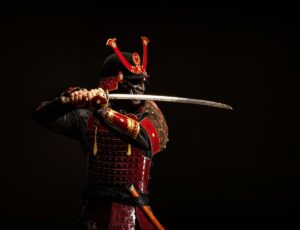
Western popular culture has developed a particular appetite for one aspect of Bushido above all others: the samurai’s relationship with death and, especially, with ritual suicide — seppuku. Films, novels, and anime have turned this into a kind of romanticized spectacle. But the actual historical and philosophical reality is far more nuanced. Seppuku was not glorified self-destruction; it was, within its very specific context, an assertion of agency — a warrior choosing the terms of his own end rather than surrendering them to an enemy or a shameful circumstance. It was extreme, rare, and deeply bound to its historical moment.
The danger of over-focusing on death in discussions of Bushido is that it obscures what the philosophy was primarily about: living well. The samurai who meditated on death did so precisely to stop fearing it — freeing himself, as a result, to be fully present in life. The discipline, the courtesy, the devotion to excellence — these were never about dying beautifully. They were about living with full moral seriousness.
Why Bushido Is Not Japanese Chivalry
The comparison to European chivalry is seductive and understandable — both are warrior codes from feudal societies that emphasize honor, courage, and loyalty. But the differences matter. Medieval European chivalry was explicitly embedded in Christian theology and centered heavily on the protection of women and the glorification of romantic love. Bushido, by contrast, was rooted in Zen impermanence, Confucian social hierarchy, and Shinto spiritual purity. Its emotional register is quieter, more inward, less theatrical. A chivalric knight might compose a ballad. A samurai might sit in silence for an hour before a battle, simply breathing. Both are forms of preparation — but they prepare for different kinds of selfhood.
Bushido Reimagined — The Code Meets the 21st Century
Gen Z, Mental Wellness, and the Reinterpretation of the Way
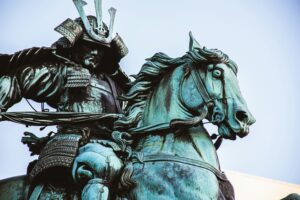
Japan’s younger generation is doing something quietly radical: they are renegotiating Bushido. Not rejecting it — the bones of the code are too deep for that — but reinterpreting it with a new urgency around individual wellbeing. Young Japanese people are increasingly pushing back against karoshi culture, finding ways to honor the virtue of devotion without sacrificing their mental health on its altar. In doing so, they are not betraying the samurai tradition. They are doing exactly what the samurai of the Edo period did — applying an ancient philosophy to the practical realities of their own era.
Mental wellness conversations, once nearly taboo in Japan’s culture of stoic endurance, are growing louder. And fascinatingly, some therapists and cultural commentators in Japan are finding that Bushido itself — particularly its values of jin (benevolence) and makoto (sincerity) — provides useful philosophical scaffolding for this shift. True Bushido, they argue, was never about suppressing the self. It was about refining it.
A Living Philosophy in a Country Still Listening to Its Ancestors
What makes Japan so quietly astonishing to the outside world is not its technology, its food, or even its aesthetic — though all of those are extraordinary. It is the sense, persistent and real, that the country exists in a continuous conversation with its own past. The ancestors are not gone. They are consulted. Their values are not archived. They are practiced — adjusted, debated, lived out in train stations and soccer locker rooms and pottery studios and corporate meeting rooms where everyone waits to speak until the most senior person in the room has exhaled.
Bushido is the name of that conversation. And Japan, quietly, is still having it.
Picture a shinkansen crew member at the start of a shift. Before boarding, she turns and bows — a full, sincere bow — to the train itself. No passenger manual requires this. No supervisor is watching. No algorithm will record it or reward it. It is simply what one does when duty is sacred, when the thing you serve deserves to be acknowledged before you begin. In that single gesture, a thousand years of philosophy stands perfectly still, then steps aboard.
Japan has never been a country of contradictions — ancient and ultramodern, silent and intense, gentle and fierce. It has always been a country of one long, unbroken conversation, still ongoing, still listening to itself with extraordinary care. The samurai are gone. The way of the samurai is not.
If Bushido speaks to you, you may find its quieter sibling equally compelling: the Japanese concept of Ma (間) — the philosophy of meaningful silence, negative space, and the profound power of what is deliberately left unsaid. Some of the most important things in Japan exist in the pause.