Kawaii: How Japan Turned Cuteness Into a Superpower

In 2013, the regional government of Kumamoto Prefecture in southern Japan released a hand-drawn black bear with red cheeks into the world — no licensing fees, no restrictions, no grand commercial strategy. Within a year, Kumamon had become one of the most recognized mascots on earth. By the end of that year, merchandise and tourism linked to that single illustrated bear had generated over $1.2 billion USD in measurable economic activity. The number is staggering. The bear is, by any conventional design standard, extremely simple. That gap — between simplicity and consequence — is precisely where the story of kawaii lives.
This is not a story about cartoons or fashion trends. It is a story about a country that developed, over centuries, a profound and sophisticated relationship with the aesthetics of smallness, softness, and vulnerability — and then watched that relationship become one of its most powerful exports. If you have ever dismissed kawaii as childish, or assumed it was purely a commercial phenomenon aimed at teenagers, this article asks you to slow down and look again.
The Word That Doesn’t Translate
From “Glowing with Embarrassment” to a Global Aesthetic Force
The word kawaii, written in its modern form, is commonly translated as “cute.” But its etymology tells a different and far more interesting story. Linguists trace the term to the classical Japanese phrase kawayushi, which described the feeling of watching someone’s face flush with embarrassment — that particular pink vulnerability of being seen at an unguarded moment. The root carried something close to tenderness, even a little heartache. To call something kawayushi was to say: I see how exposed you are, and I find that beautiful.
Over centuries, the word softened and broadened. By the twentieth century, kawaii had evolved to describe a wide range of small, gentle, endearing things — a round-faced doll, a shy animal, a child’s drawing, a miniature food replica. But underneath all those applications, the emotional DNA of the original word survived: the sense that vulnerability is not weakness but a kind of grace.
Why “Cute” in English Captures Almost Nothing of What Kawaii Means
The English word “cute” began as a shortening of “acute” — meaning sharp, clever, shrewd. It drifted toward physical attractiveness, then toward smallness and charm. Today it is a casual compliment, casually given. Kawaii is none of these things. Kawaii is an aesthetic philosophy with its own internal logic, its own history of political resistance, and its own capacity to generate billions of dollars and diplomatic goodwill. When scholars at major Japanese universities write dissertations analyzing kawaii, they are not overcomplicating something simple. They are correctly identifying that the English translation has been losing almost everything in transit for decades.
Born from Rebellion — The Surprisingly Radical History of Kawaii
The Teenage Girls Who Weaponized Handwriting Against Authority
The modern kawaii aesthetic has a surprisingly precise origin point: Japanese high school classrooms in the late 1960s and early 1970s. Teenage girls began writing in a deliberately childlike style — large, rounded letters, decorated with tiny stars, hearts, and faces drawn into the margins of notebooks. The handwriting was called marui ji, meaning “round writing,” and it was, in the most literal sense, a rebellion.
Japanese educational institutions at the time enforced strict penmanship standards. The structured, angular script of formal Japanese writing was tied to discipline, hierarchy, and adult authority. The girls who chose marui ji were refusing all of that — performing softness as defiance, choosing the aesthetic of childhood over the aesthetic of power. Schools attempted to ban the style. Publishers refused to print in it. The girls kept writing it anyway. By the 1980s, marui ji had spread across the country and begun seeping into advertising, packaging, and popular media. A handwriting style born in protest had become the visual grammar of a generation.
Hello Kitty’s Silent Philosophy and the Commercialization of a Movement
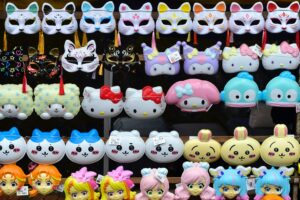
Into this cultural moment arrived Hello Kitty (Harokiti), a white cat with no mouth, introduced by the Sanrio company in 1974. The absence of a mouth was, according to Sanrio’s own explanation, intentional: a character with no expression of her own could receive whatever emotion the person looking at her brought to the encounter. She was an aesthetic mirror. She was also an extraordinarily shrewd commercial idea. Hello Kitty did not sell a personality — she sold a space for your personality.
The commercialization of kawaii that followed was massive and sometimes uneasy. What had begun as teenage resistance to institutional authority was absorbed, packaged, and sold back to the very market it came from. And yet the philosophy underneath survived, because it turned out to be genuinely useful, genuinely resonant, and genuinely deep.
The Philosophy Underneath the Pastel Surface
Vulnerability as Aesthetic Value — Kawaii, Amae, and Mono no Aware
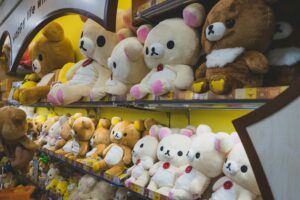
To fully understand kawaii, you need two other Japanese concepts beside it. The first is amae, a term described by psychiatrist Takeo Doi in his landmark 1971 study as the specifically Japanese tendency to find comfort in dependence — to allow oneself to be looked after, and to feel that being cared for is not shameful but natural. Amae is not passivity; it is the active acceptance of one’s own need for others. Kawaii aesthetics are saturated with amae: they celebrate helplessness, roundness, softness, the quality of needing protection.
The second concept is mono no aware, the bittersweet recognition that beautiful things are beautiful partly because they are fragile and impermanent. The cherry blossom is the canonical example — treasured most intensely because it falls within days. Kawaii things — small animals, infant faces, miniature objects — trigger the same response. Their smallness implies fragility. Their fragility produces tenderness. Their tenderness produces love. This is not accidental. It is the same emotional mechanism, applied across a vast range of cultural production.
The Culture of Smallness — How Deep Japanese Aesthetics Made Kawaii Inevitable
Japan has long cultivated an aesthetic relationship with smallness that has no precise equivalent elsewhere. Miniature art (minichiua geijutsu), bonsai, the netsuke toggles carved with extraordinary detail for objects no larger than a thumb, the tradition of bento boxes arranged with the care of a still-life painting — Japan has repeatedly demonstrated that to make something small and perfect is not to diminish it but to concentrate its essence. Kawaii fits naturally into this tradition. It is not a departure from Japanese aesthetic values. It is one of their most vigorous expressions.
Soft Power With Hard Numbers — Kawaii as Diplomacy and Economy
When a Government Appoints Cuteness Ambassadors — and Means It
In 2009, Japan’s Ministry of Foreign Affairs did something that initially struck international observers as either charming or absurd: it appointed three young women as official Kawaii Ambassadors (Kawaii Taishi) to promote Japanese culture abroad. One represented Harajuku fashion, one represented the Lolita aesthetic, one represented everyday school-uniform style. They traveled, gave presentations, and appeared at cultural events worldwide.
The program was not a joke. It was a carefully considered extension of Japan’s broader soft power strategy — the recognition that cultural influence, exercised through aesthetics and emotion rather than through military or economic pressure, was one of Japan’s most potent diplomatic tools. Political scientist Joseph Nye, who coined the term “soft power,” later cited Japanese popular culture as one of the most effective contemporary examples of the concept in action. The government had simply decided to be explicit about it.
From Kumamon to Dementia Robots — The Reach of a Design Principle
Kumamon’s billion-dollar performance is the most dramatic example of kawaii economics, but it is far from the only one. Japan’s yuru-kyara mascot culture — in which every prefecture, city, company, and government department maintains an officially designated cute character — functions as a continuous, low-cost engine of public engagement and brand identity. More surprisingly, kawaii design principles have migrated into fields with no obvious connection to aesthetics at all.
PARO, a therapeutic robot designed in the form of a baby harp seal, was developed by Japan’s National Institute of Advanced Industrial Science and Technology to provide comfort to elderly patients with dementia. Its large eyes, soft fur, and small sounds trigger the same neurological response as an infant or a small animal. Clinical studies have documented measurable reductions in patient anxiety and depression. Kawaii, in this application, is not decoration. It is medicine.
Kawaii Is Not Finished — It Is Evolving
Quiet Kawaii, AI Tensions, and the Global Mental Health Crossover
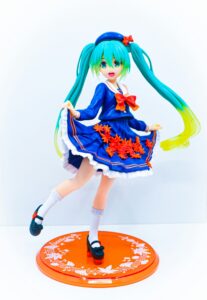
The most recent evolution of kawaii has moved away from loudness. Shiro kawaii, or “white kawaii,” and the broader mori girl (mori garu) aesthetic emphasize softness, natural textures, and a kind of deliberate quietness — kawaii stripped of its commercial brightness and returned to something closer to its emotional origin. On social media platforms worldwide, a generation dealing with anxiety and burnout has discovered that the kawaii instinct — the impulse to seek comfort in small, gentle, beautiful things — maps cleanly onto contemporary mental health language about self-care, emotional regulation, and the need for tenderness in a hard world.
Meanwhile, the rise of AI-generated imagery has introduced genuine tension into kawaii visual culture. Artists and illustrators who built careers on hand-drawn softness now navigate a landscape in which that softness can be algorithmically approximated. The Japanese creative community’s response has been characteristically nuanced — not simply resistant, but asking deeper questions about what it means for vulnerability to be simulated rather than felt.
Why the World’s Luxury Houses Are Now Students of Harajuku
Louis Vuitton collaborated with Takashi Murakami (Murakami Takashi), whose entire artistic project can be read as a sustained philosophical investigation of kawaii and its relationship to high and low culture. Gucci has drawn from the visual language of Japanese street fashion seasons that trace their lineage directly to Harajuku. The global luxury industry’s sustained interest in Japanese aesthetics is not trend-chasing. It is the recognition that Japan developed a visual and emotional vocabulary — precise, coherent, deeply felt — that the rest of the world is still learning to read fluently.
The designers who study Harajuku are not studying costumes. They are studying a system of meaning-making in which what you wear communicates your relationship to vulnerability, community, identity, and joy. That is not a small thing to study. That is the whole question of what fashion is for.
There is a face buried in the etymology of the word kawaii — flushed, exposed, caught in the middle of an unguarded moment. That face is the origin of everything: the bear with red cheeks, the cat with no mouth, the therapeutic seal, the round handwriting in the margins of a notebook. Kawaii began as the feeling of being seen in your most vulnerable moment and finding that vulnerability beautiful. The research accumulating around this aesthetic — in psychology, in diplomacy, in design, in clinical medicine — suggests that this instinct is not a Japanese quirk. It may be something far more universal that Japan simply had the cultural vocabulary to name first. The world is catching up, one round-faced character at a time.
If kawaii opened a door for you, the philosophy goes deeper: explore the aesthetics of wabi-sabi, mono no aware, and the full logic of Japan’s visual culture — a world where imperfection, impermanence, and incompleteness are not flaws to be corrected but truths to be honored.
